


Pipeline Overview
Molecure, a clinical stage biotechnology company, discovers and develops breakthrough small molecule drugs that modulate unexplored protein targets and novel RNA to treat cancer, fibrotic and inflammatory diseases.
Our exceptional in-house medicinal chemistry and biology capabilities, along with novel target insights gained from leading academic centers, have allowed us to create a broad pipeline of drug candidates targeting unique and unexplored protein targets. Our lead assets, OATD-01 and OATD-02, are in clinical development for the treatment of sarcoidosis and solid tumors respectively.
In addition, we are developing a unique RNA platform, to discover small molecule compounds that interact directly with the mRNA of disease-related proteins, with significant potential across multiple disease areas.
CLINICAL CANDIDATE
SELECTION
Target
Hit-To-Lead
Optimization
Development

Target
Optimization
Development


Targeting unexplored proteins
Molecule is discovering and developing first-in-class small molecules in oncology, inflammation and fibrosis that target/interact with selected, unexplored proteins.
We have generated a diverse pipeline consisting of seven distinct programs, validating the strength of our discovery and translational capabilities, including:
- 2 programs in clinical development – currently one is in Phase II trial and one is in a Phase I trial
- 5 programs in preclinical development, spanning 4 unchartered novel target families (arginases, chitinases, deubiquitinases as well as one undisclosed target).
Chitinase Inhibitors
Molecure has developed a unique series of chitinase inhibitors that modulate macrophage function, reducing the severity of inflammation and thus offering a novel therapeutic approach in inflammatory and fibrotic diseases. Elevated levels of one of the chitinases, chitotriosidase (CHIT1), are associated with inflammatory and fibrotic diseases, leading to excessive macrophage activation.
OATD-01
OATD-01, the lead drug candidate developed by Molecure, is a first-in-class dual chitinase inhibitor for the treatment of fibrotic and inflammatory diseases, including interstitial lung diseases such as sarcoidosis and idiopathic pulmonary fibrosis (IPF).
OATD-01 is a CHIT1 inhibitor and has demonstrated potent anti-inflammatory and anti-fibrotic effects in preclinical studies in various disease models, including sarcoidosis, pulmonary fibrosis and non-alcoholic steatohepatitis.
The phase I study was completed in 2022 and the phase II study in sarcoidosis patients started in March 2024.
OATD-01 is an innovative, effective and safe non-steroidal new chemical entity (NCE) dual inhibitor of AMCase and CHIT1 with a mechanism of action that targets inflammation and fibrosis simultaneously.
Numerous clinical studies and Molecure’s own translational data have shown that CHIT1 is upregulated in many inflammatory and fibrotic diseases, where its activity correlates with disease stage, progression and clinical prognosis. CHIT1 is most highly expressed in pathologically activated macrophages located in lesional areas.
Molecure studies showed that CHIT1 activity was significantly elevated in the serum of sarcoidosis patients and that CHIT1 expression was restricted to granulomas and localised in macrophages. Ex vivo OATD-01 inhibited the production of pro-inflammatory mediators in lung macrophages.
In acute models of granulomatous inflammation in mice, OATD-01 showed anti-inflammatory effects. Furthermore, in a chronic model, inhibition of CHIT1 by OATD-01 led to a reduction in the number of organised granulomas in the lung and a decrease in sarcoidosis-related gene expression.
In 2020, Molecure’s chitinase inhibitor, OATD-01, was successfully licensed by Galapagos NV for global product development and commercialisation.
Following a portfolio review by Galapagos in 2022, Molecure regained full rights to OATD-01 along with all associated IP and know-how. Molecure continues to develop OATD-01 and initiated a Phase II clinical trial in sarcoidosis patients in March 2024.
Our second generation CHIT1 inhibitor program
CHIT1 is also involved in the pathology of various diseases with inflammatory and fibrotic components, including non-alcoholic steatohepatitis (NASH), and potentially a broad spectrum of neurological diseases that are characterized by excessive activation of inflammatory cells in the brain (neuroinflammation).
Molecure is developing other selective CHIT1 inhibitors, structurally different from OATD-01, which have been selected for proof-of-concept validation in models of these diseases.
Arginase Inhibitors
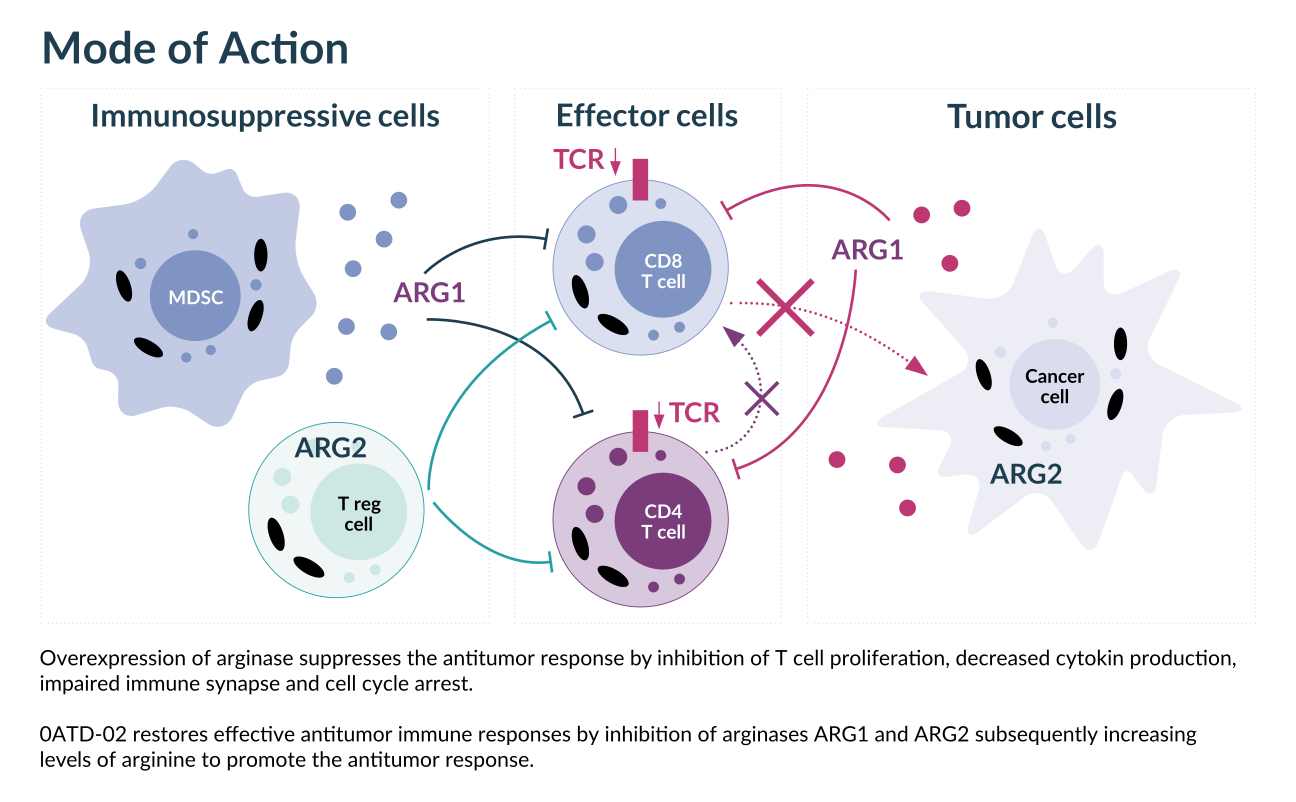
Arginase 1 (ARG1) and Arginase 2 (ARG2) are validated targets that have been found on a variety of tumor types where their increased activity correlates with more advanced disease and worse clinical prognosis due to diminished arginine levels.
Our second proprietary candidate, OATD-02 is the first and only dual acting, highly potent arginase inhibitor in cancer development, involved in both tumor immunity and metabolism. It has been selected as a clinical candidate for the potential treatment of a broad range of tumors in combination with other anti-cancer therapeutics.
In March 2023, Molecure initiated a Phase 1 clinical trial.
Molecure dosed the first patient in 1Q 2023 in a Phase I clinical trial to assess safety, tolerability and preliminary efficacy of OATD-02 in patients with advanced and/or metastatic solid tumors.
Deubiquitinase Platform
At Molecure DUB proteins comprise a potential important group of targets for anticancer therapeutic agents. Ubiquitination, the addition of ubiquitin to a protein, is a post-translational modification affecting the lifespan of proteins and therefore, critical to cell homeostasis. Expression of ubiquitin-specific proteases (USPs), enzymes involved in the cleaving ubiquitin residues froms proteins, can be abnormal in tumors and the tumor microenvironment. This way cancer cells extend the life of specific proteins that allow them for uncontrolled growth.
USP7 Inhibitor Program
Molecure is developing inhibitors of selective and oral inhibitor of ubiquitin specific protease 7(USP7), whose high expression is seen to be aberrant in a number of tumor indications, promoting oncogenesis. In our studies, we have shown that in cancer USP7 regulates the level of many proteins involved in the immune response, hence inhibition of USP7 activity leads to the activation of T cells and the stimulation of the immune system to act against cancer cells.
Molecure has identified a lead molecule OAT-4828, a potent and selective USP7 inhibitor, which demonstrates safety and efficacy in selected models of cancer. Molecure is currently of searching for a lead candidate for pre-clinical development.
USP21 Inhibitors Program
The USP21 inhibitor program is based on the experience built by Molecure and naturally expands the pool of therapeutic targets from the family of enzymes – ubiquitin-specific proteases (USP). The results obtained so far by Molecure’s scientists confirm that the lack of USP21 in cancer cells slows down their proliferation and migration, and also regulates the level of key proteins involved in oncogenesis, which have been considered “undruggable targets” for years. USP21 plays an important role in the modulation of cancer cell metabolism by affecting mitochondrial function. This project is currently at the hit-to-lead stage and focuses on optimizing the identified molecules in terms of their activity, selectivity and pharmacological profile.
A new project targeting an undisclosed signaling pathway crucial to the development of fibrosis
The project aims at the development of new small molecule inhibitors of an undisclosed signaling pathway with potential use in the treatment of fibrotic diseases, in particular idiopathic pulmonary fibrosis. The project is at the stage of lead optimization with an objective to improve lead molecule’s activity and pharmacological profile. The screening of compounds utilizes phenotypic assays and is based on the screening cascade developed by the Molecure team using the know-how from the University of Michigan (provided under a non-exclusive license agreement, including know-how in the area of discovering new molecules targeting an undisclosed signaling pathway crucial for the development lung fibrosis).
YKL-40 Program
YKL-40 which belongs to the chitinase-like proteins (CLPs) family, is a secreted protein with homologies to chitinases but devoid of catalytic function. High levels of YKL-40 are linked to poor prognosis, progression and the severity of various inflammatory disorders and numerous types of cancer. The protein is produced and secreted by immune cells (especially macrophages, neutrophils) and various structural cells like fibroblasts, smooth muscle, epithelial, endothelial and also cancer cells.
The program led to the discovery of the compound OAT-3912, which binds strongly and selectively to YKL-40. In preclinical studies in a colorectal cancer model, OAT-3912 has been shown to slow tumor growth by reactivating the immune system response, offering potential therapeutic benefits in many types of cancer. The compound has also shown efficacy in preclinical models of inflammatory and fibrotic diseases.
Unique RNA platform
Molecure is developing a unique RNA platform to discover small molecule compounds that interact directly with the mRNA of disease-related proteins. By modulating mRNA biological function and affecting its translation we would be able to discover medicines with a novel mechanism of action.
This approach offers access to potentially thousands of new therapeutic targets, which were previously considered ‘undruggable’ to traditional small molecules that interact with proteins.
From the estimated ∼20 000 proteins that comprise the human proteome, only 15% are considered “druggable”. This is because just a fraction of proteins that are potential drug targets i.e. are linked to a disease, have the ability to bind small molecules. As a result, the human transcriptome (RNA molecules) is underexploited as a new source of therapeutic targets and for long considered ‘undruggable’ via conventional approaches.
The development of Molecure’s mRNA platform is being supported by an exclusive research collaboration agreement with the International Institute of Molecular and Cell Biology (IIMCB) in Warsaw. This collaboration provides the company with access to world-leading and unique bioinformatics tools developed by the Laboratory of Bioinformatics and Protein Engineering (LBIB) at IIMCB, headed by Prof. Janusz Bujnicki.
In addition, the platform benefits from the knowledge and experience of experts in the field of RNA research working at renowned academic centers. Our collaborators include:
- Joanna Sztuba-Solińska, PhD (expert in the field of using experimental methods to determine the 2D structure of RNA molecules),
- dr Michael T. Wolfinger (professor of bioinformatics at the University of Freiburg, expert in the field of development and utilization of bioinformatics methods for RNA secondary structure prediction, and identification of evolutionarily conserved RNA regions),
- Chase Weidmann, PhD (assistant professor at the University of Michigan, expert in the field of long-range RNA interactions and RNA-protein interaction investigation).
The RNA platform gives Molecure the opportunity to use unique methods to discover small-molecule drugs targeting mRNA.
Molecure’s workflow consists of:
- Using algorithms to identify stable and functional fragments of mRNA encoded by genes that are clinically significant, while the proteins they encode are not druggable. The predicted structures of these fragments are then confirmed at single-nucleotide resolution using sequencing and chemical sampling.
- Using a combination of bioinformatics and experimental methods, allowing rapid and accurate identification of small molecule binding sites.
- Using a combination of many modern methods to discover new molecules with therapeutic potential that interact directly with mRNA. In the RNA platform, we have successfully applied methods for modeling the structures of biological molecules and their complexes, traditional medicinal chemistry technologies, distinct procedures for screening and optimizing the structures of hits and leading compounds, as well as a wide range of approaches to evaluate the activity of compounds in vitro and in
Molecure’s current goal is to provide the biopharmaceutical industry with a platform for identifying starting compounds, confirming that mRNA can be a therapeutic target for small molecules, which opens up tremendous scientific opportunities providing tangible medical solutions.